How to Choose the Right Massage Oil for Your Routine
Choosing a massage oil often seems simple at first — until you actually start using one regularly. That’s when the small details begin to matter. How quickly it absorbs, how it feels on the skin, how the scent evolves over time — these are the things that shape the experience.
The right massage oil doesn’t just sit on the surface. It becomes part of your routine, whether that’s a quick moment after a shower or a longer, more intentional wind-down at the end of the day.
It’s Not Just About Oil — It’s About Feel
One of the first things you’ll notice about any massage oil is how it moves.
Some oils feel too light and disappear almost immediately. Others feel heavy and linger longer than you’d like. The most balanced oils sit somewhere in between — offering enough glide to move comfortably across the skin, while still absorbing at a steady, natural pace.
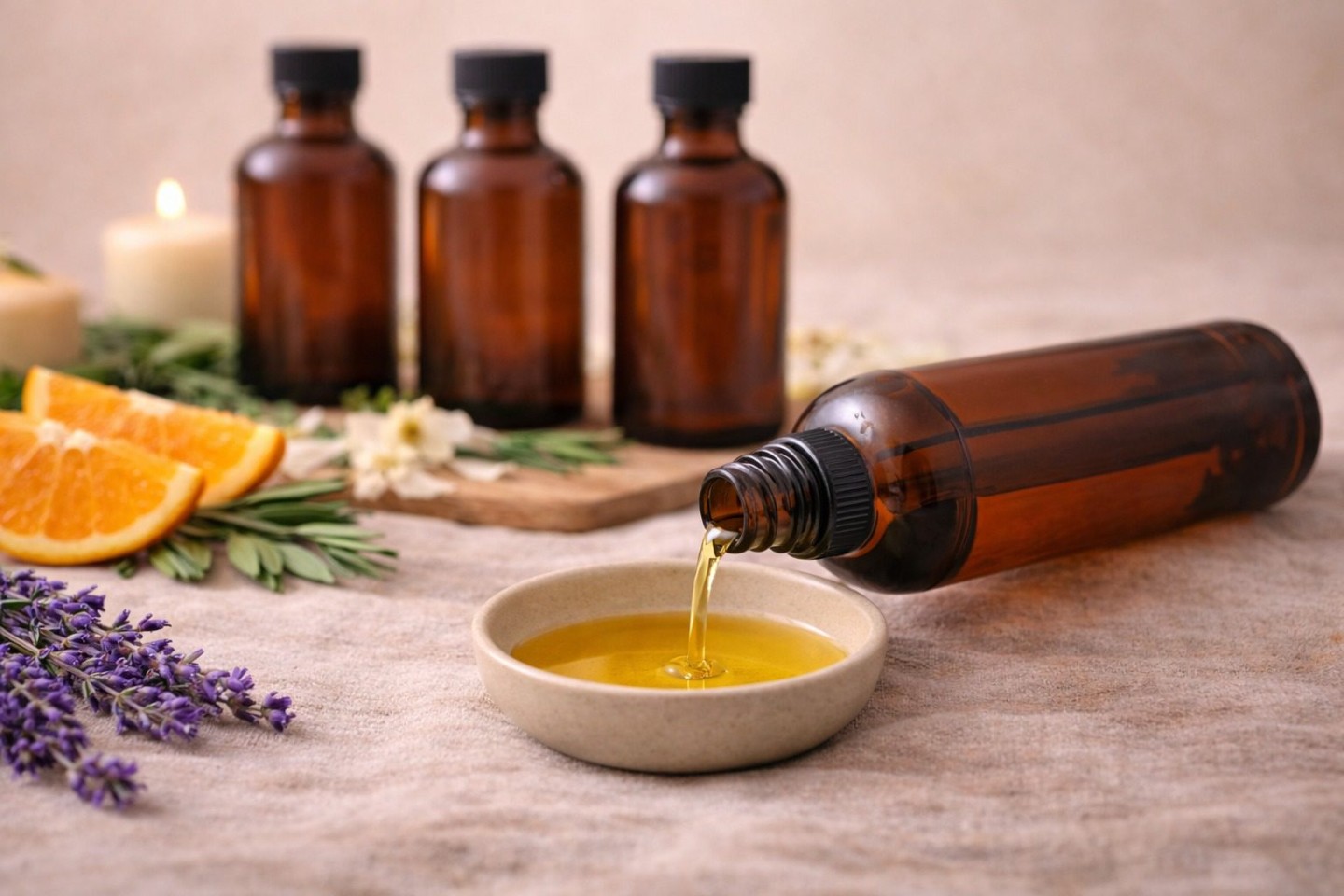
This balance usually comes down to the base. Many well-formulated massage oils use ingredients like jojoba or almond oil because they provide that smooth, consistent feel without becoming overly greasy.
If you’re interested in how these base oils work, this overview of carrier oils explains their role in more detail:
https://en.wikipedia.org/wiki/Carrier_oil
Let Scent Guide the Experience
Once the texture feels right, scent becomes the defining element.
Rather than thinking of scent as a single preference, it helps to think of it as something that changes with your day.
In the morning or after a shower, lighter and brighter scents tend to feel more natural. Something like Mandarin Orange brings a fresh, citrus edge, while Tea Tree offers a clean, crisp profile that feels simple and refreshing.
As the day slows down, preferences often shift toward softer, more grounding scents. Lavender has a familiar, herbal quality that works well in the evening, while Vanilla feels warm and comforting. For something deeper, Sandalwood adds a subtle richness that lingers gently.
Even Coconut, with its light and familiar profile, can work across both day and evening routines.
Having a few options allows you to match your oil to the moment, rather than using the same one every time.
Where It Fits Into Your Day
Massage oil doesn’t need a dedicated occasion.
For many people, it naturally becomes part of existing routines — applied after a shower, used during a short break in the evening, or incorporated into a simple self-care ritual.
Because it’s so flexible, the best massage oil is usually the one that feels easy to reach for. Something that fits seamlessly into your day rather than requiring extra effort.
Choosing Something You’ll Keep Using
At a certain point, the decision becomes less about comparing features and more about how the product feels over time.
Simple formulations tend to be more consistent. Clean textures feel better with repeated use. And scents that aren’t overpowering tend to remain enjoyable, even after daily use.
If you’re exploring different options, it can help to start with a few scent profiles and see which ones naturally become part of your routine.