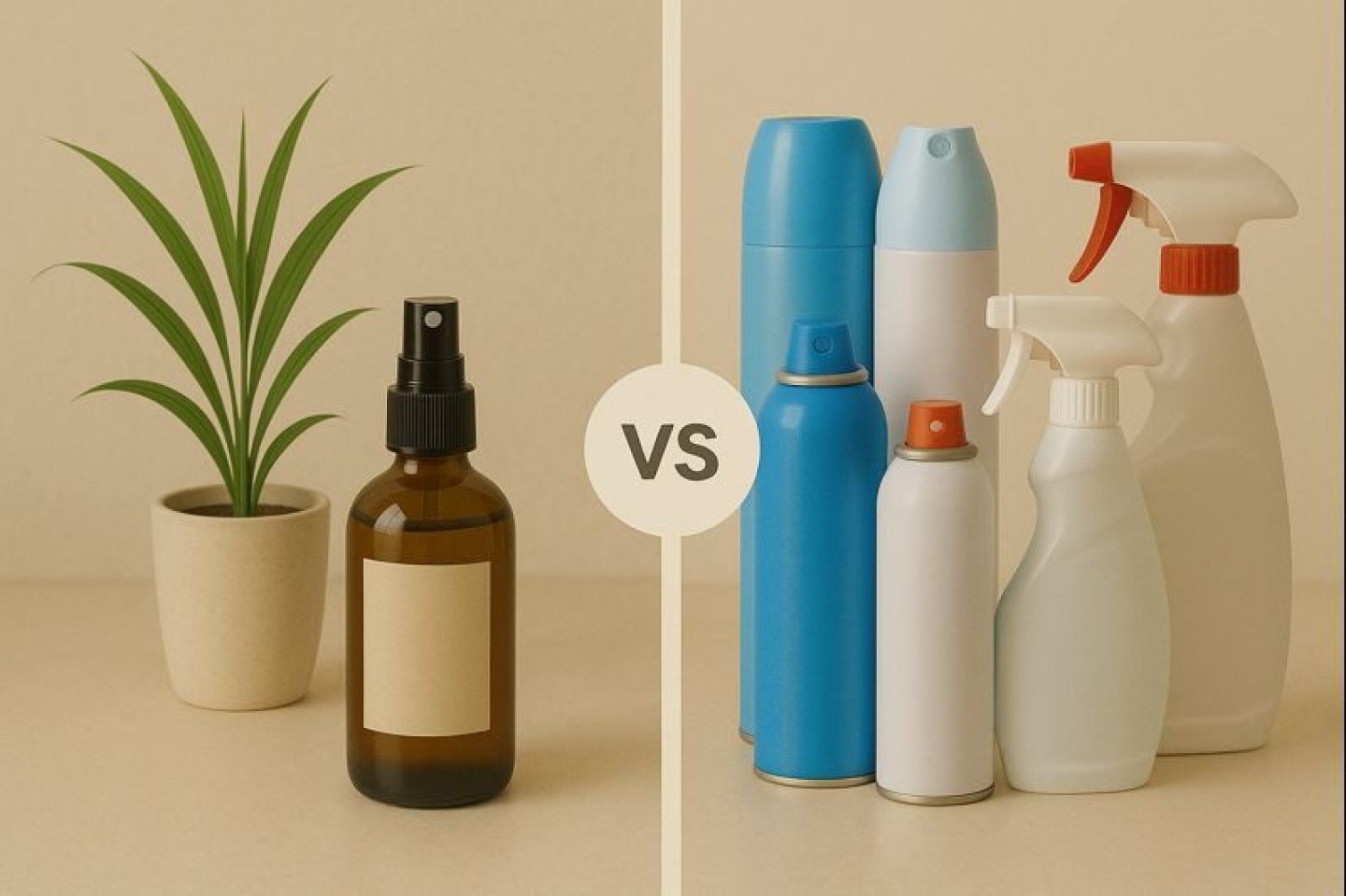
Natural Room Sprays vs Synthetic Air Fresheners — What’s the Difference?
Understanding Conventional Air Fresheners
Many conventional air fresheners rely on synthetic fragrance blends designed to overpower odors rather than address them. These products often list “fragrance” as a single ingredient, which can represent dozens of undisclosed aroma compounds.
While effective at masking smells, these sprays tend to create a strong, lingering scent that can feel artificial in smaller or enclosed spaces.
What Makes Natural Room Sprays Different?
Natural room sprays use essential oils derived from plants to add scent to a space. Instead of creating a flat, uniform smell, essential oils release layered aromatic notes that evolve naturally.
Key differences include:
- Plant-based aromatic ingredients
- Lighter, more balanced scent profiles
- Multi-use versatility (rooms, fabrics, linens)

Odor Neutralization vs Odor Masking
Synthetic sprays often aim to cover odors with stronger fragrance. Essential-oil-based sprays work differently by refreshing the air and fabrics where odors linger.
This makes natural sprays well-suited for:
- Kitchens
- Bathrooms
- Bedrooms
- Shared living spaces
When to Choose a Natural Room Spray
A natural room spray may be the right choice if you:
- Prefer botanical scents
- Want a lighter fragrance presence
- Use sprays on fabrics or linens
- Enjoy rotating scents with the seasons
Reading Labels Matters
When choosing any air-freshening product, transparency is key. Look for:
- Clearly listed essential oils
- No vague “fragrance” labeling
- Simple, understandable ingredients
For more on fragrance labeling and ingredients, visit the Environmental Working Group’s fragrance overview:
https://www.ewg.org/skindeep/ingredients/702011-FRAGRANCE/